

Which Costa Rican Animals Eat Hibiscus Plants
While exploring the area around Costa Rica'south Manuel Antonio National Park, nosotros noticed a rope strung beyond the road.
Curious, nosotros started to pay closer attention and found that they were all over the place, tons of them.
We wondered what was up, and the answer was a scrap surprising, most of the ropes can be traced back to a couple of nine-year-old girls. What? That's right, 2 kids with a big idea had a huge touch on on the ecosystem of the region.
Let'due south get dorsum to the beginning and explain how we learned about this.
A Facebook friend suggested that while we were in Costa Rica we should bank check out Kids Saving the Rainforest if we had the gamble and, chance would have information technology, we would.
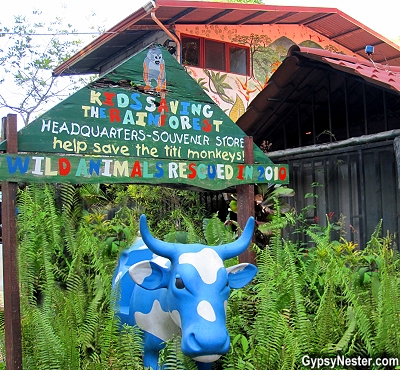
We but happened to exist staying near the Hotel Mono Azul, Blue Monkey to us gringos, which is the official meeting spot for tours of the Kids Saving the Rainforest Wildlife Rescue Center and Sanctuary.
A short ride into the wood took u.s. to the Blue Banyan Inn, which provides a dwelling to the sanctuary and lodging for volunteers. As we chatted with a few of the longtime workers, we got the scoop on the remarkable story of how things all came together.
Dorsum in 1999, 2 friends, Janine Licare and Aislin Livingstone, got the thought to heighten money for a project to "save the rainforest," so they set most selling papier-mâché bottles and painted stone paperweights from a "crazy cute" roadside stand.
They were shocked to observe that the money they raised was not enough to buy and save the entire woods, they were only nine after all, so they started small-scale by making monkey bridges.
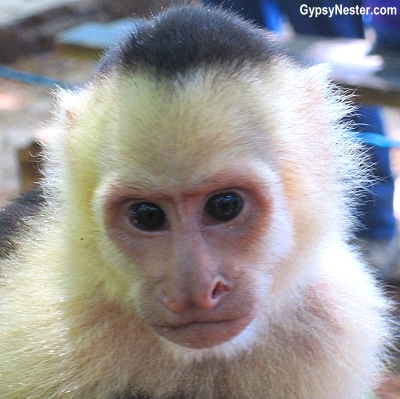
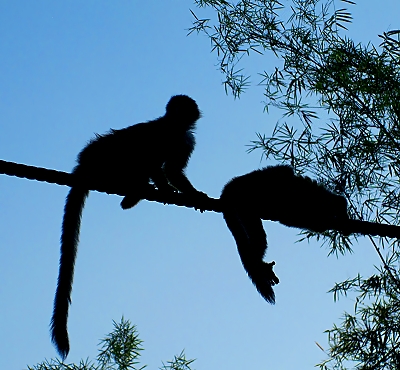
Then that's what those ropes across the roads are! They provide a safe manner for monkeys to become across the route.
Much meliorate than power lines, which accept a nasty trend to electrocute a crossing primate from fourth dimension to time.
Hearing their story had us excited to see what became of the project after fifteen years, so nosotros headed into the woods to check information technology out.
Quite an operation has grown from those apprehensive beginnings, placing bridges (over one hundred and thirty so far) in areas where monkeys oftentimes travel is still a large function of it, and those efforts have paid off big time.
Since get-go the program, the population of the once endangered squirrel monkey has more than doubled.
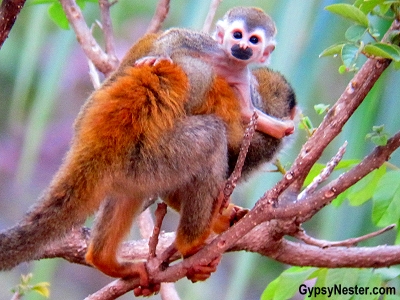
The bridges were just the beginning; they have worked with Costa Rica's National Park Service and schools to plant nearly seven g rainforest trees, and the Wild fauna Rescue Center and Sanctuary is now in full swing.
To date they accept saved hundreds of monkeys, likewise in addition to marmosets, tamarins, kinkajou, sloths, porcupines, parrots, and parakeets.
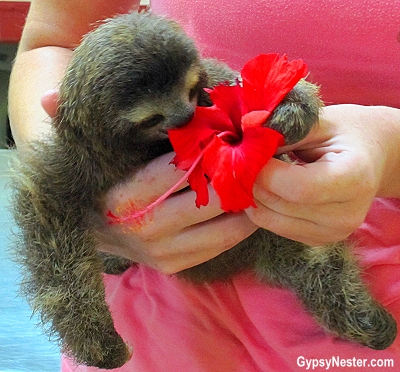
Our beginning stop was the hospital, where an orphaned three-toed sloth baby was getting a snack of hibiscus flowers.
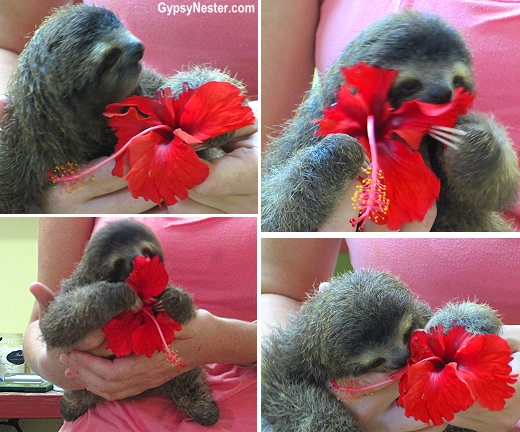
If you think that's cute, you accept to watch her in action:
Injured and orphaned animals are brought in from all around the expanse, treated, and ideally released dorsum into the wild.
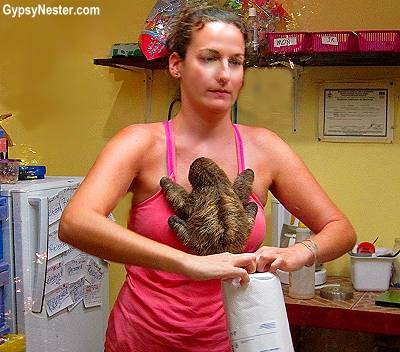
It is very like to the highly successful arrangement nosotros saw in Commonwealth of australia at the Koala Sanctuary and the Australia Zoo.
As with those facilities, if it is determined that the animals are unlikely to fare well in the wild, or if they are not indigenous to the area, then they are kept on site and looked later for the remainder of their lives.
Because of this we got to see a few species that we otherwise never would have encountered in Costa Rica.
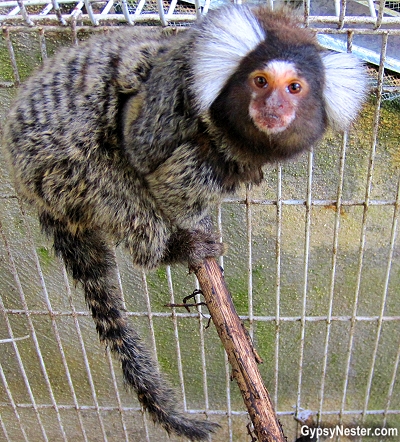
Ane of those was a tiny member of the primate family, the common marmoset.
They are well represented in the sanctuary because they take adapted very successfully to breeding while in captivity.
The attempts to go along them separated past sex take proven to be less than completely constructive. From the looks of the little guys, we'd say it would be a good idea to never feed them after midnight, or let them get moisture either.
Native to Brazil, these gremlins …oops… marmosets, were rescued from a scientific research facility, or at to the lowest degree the first generation of them was. Most of the other non-indigenous species were pets that either escaped their owners or had been abased.
Only the bulk of the sanctuary's residents are native species that will one day get to return to the rainforest.
While the center regularly cares for all of Costa rica's types of monkeys — capuchin, howler, squirrel, and Geoffroy'south spider monkeys – but three of the four were existence tended to on the day of our visit.
In that location were no howler monkeys, which was good news in that it meant none were currently sick or injured. We had seen some in the wild so we didn't feel like nosotros were missing out besides much, and there were plenty of other monkeys to run across.

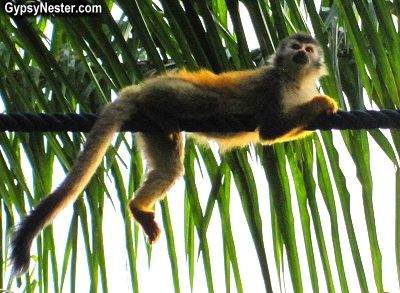
A few days earlier, on the grounds of The Parador Resort, we had encountered a grouping of Fundamental American squirrel monkeys.
At present we had a gamble to get even closer, and possibly interact a flake with the rambunctious little rascals.
Their huge enclosure was peculiarly designed so that visitors can laissez passer right through the troop equally they scramble alongside and overhead.
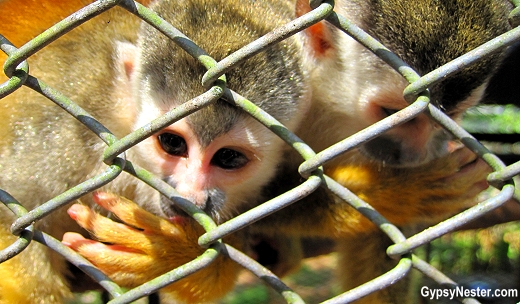
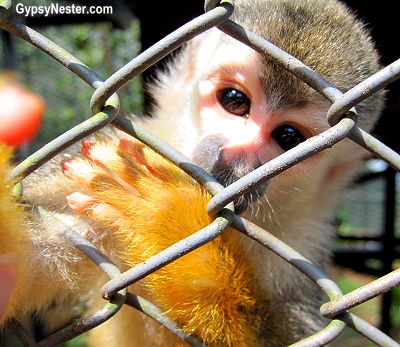 They seemed equally every bit curious about us as we were about them, often stopping to examine us through the debate.
On several occasions they reached through the debate, commonly in attempts to snatch a hat, button off of a shirt, or camera.
Were they but curious, or out to snap a few monkey selfies?
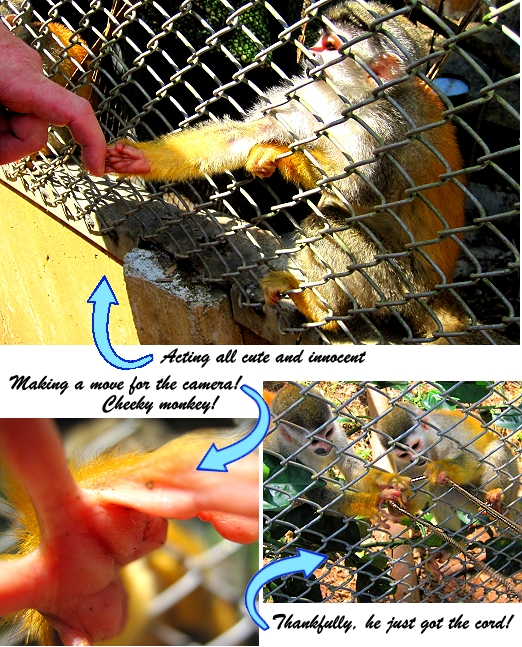
Note: The photo of the man finger is of a shelter volunteer and visitors are not immune to touch or handle the animals at any fourth dimension.
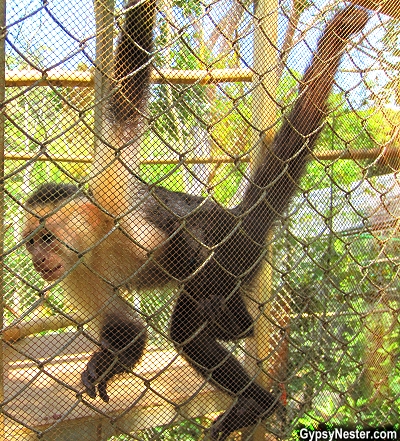
A smaller grouping of white-faced capuchins began to get a niggling boisterous when they heard the racket the squirrels were kick up, so we headed down the path to run into what they were upwardly to.
These seem to be the nigh common primate in Costa Rica, we had seen them almost every solar day.
In fact, we had been lucky enough to see all of Costa Rica's indigenous monkeys in the wild, except the rare Geoffroy'due south spider monkey, so nosotros were about excited to see him.
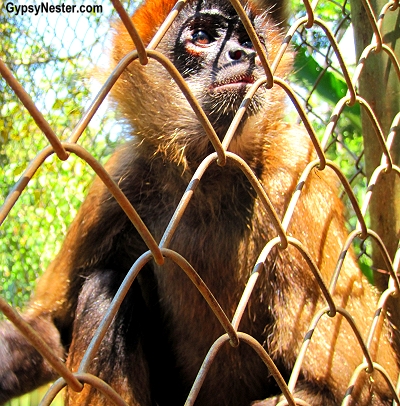
Even in captivity it was a treat for us to run into the Geoffroy'south spider monkeys because, not only are there very few, they generally do non live in the area around Manuel Antonio National Park.
They are listed as endangered past the International Union for Conservation of Nature.
Unfortunately the pair hither at the sanctuary will not exist released back into the wild considering the female is as well old, and the male person was a pet and is not suited for the wild life.
He demonstrated that indicate when he escaped 1 fourth dimension, instead of heading out into the woods, he made a beeline to a nearby home and fabricated himself comfortable in the living room.
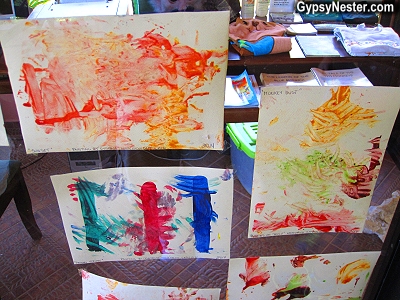
These primates are all very intelligent creatures, so the staff has come up up with creative activities to go along them entertained.
A favorite for both the volunteers and the monkeys is painting.
Blank pages with fruit and vegetable dyes are placed where the animals can become to them and let their inner Picasso out. The results are quite interesting, very avant-garde.
We got to check out several of the works in the gift surface area equally we were leaving. Aye, fifty-fifty hither we exited through the gift shop.
David & Veronica, GypsyNester.com
Find out more about Kids Saving the Rainforest – click here to visit their website.
DELVE DEEPER:
See where we stayed: Parador Resort and Spa
Detect out more about cute Manuel Antonio National Park
Visit the animals of Costa Rica afterward dark!
See all of our adventures in Costa Rica!
Source: https://gypsynester.com/how-two-little-girls-saved-the-rainforest-of-costa-rica/
Posted by: utechtcittle1995.blogspot.com
0 Response to "Which Costa Rican Animals Eat Hibiscus Plants"
Post a Comment